

Thermal break
Polyamide barrier between inner and outer profile stops heat loss and interior condensation.
For an apartment where warmth and price come first, look at Metal-plastic windows & doors
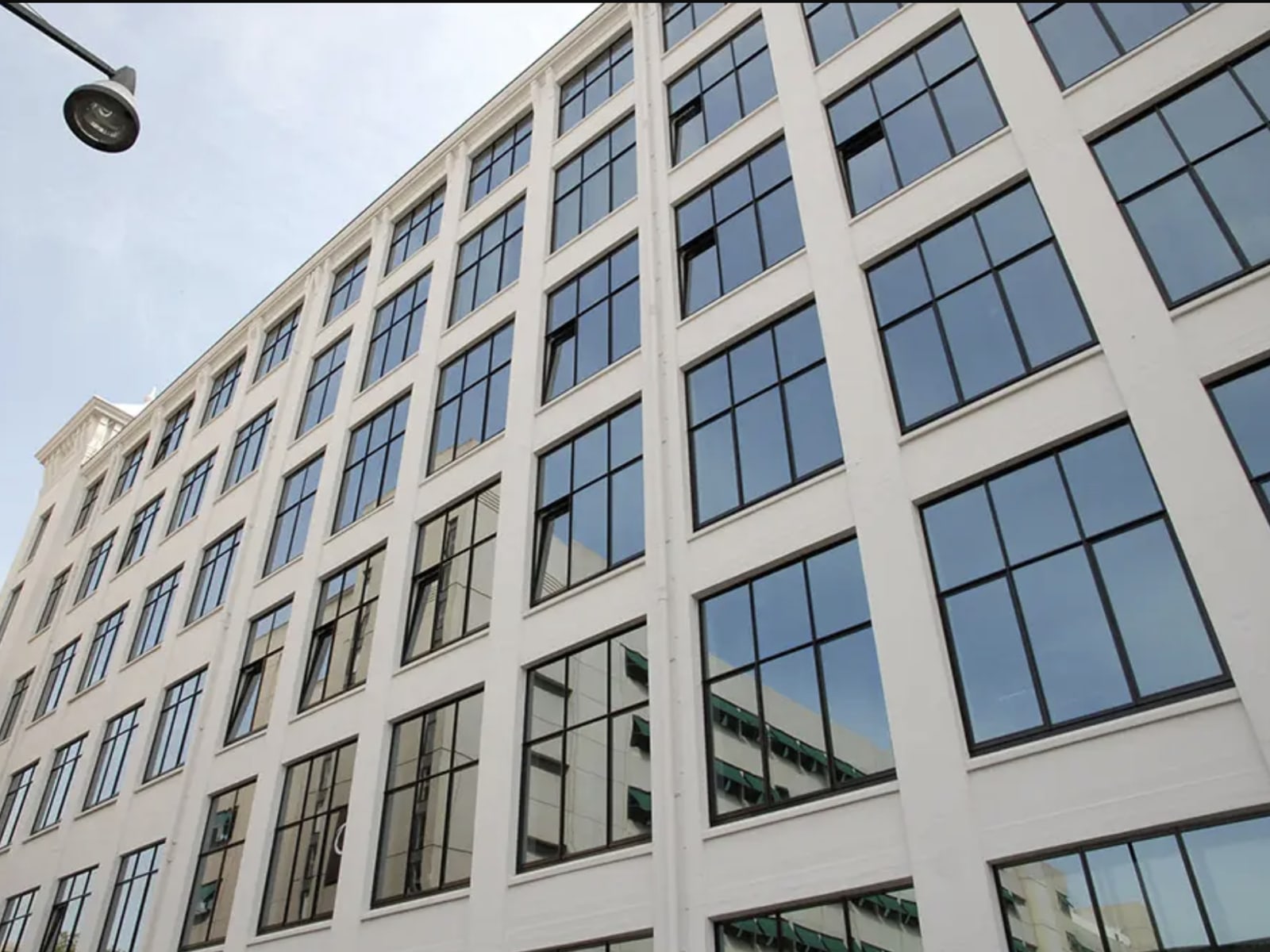
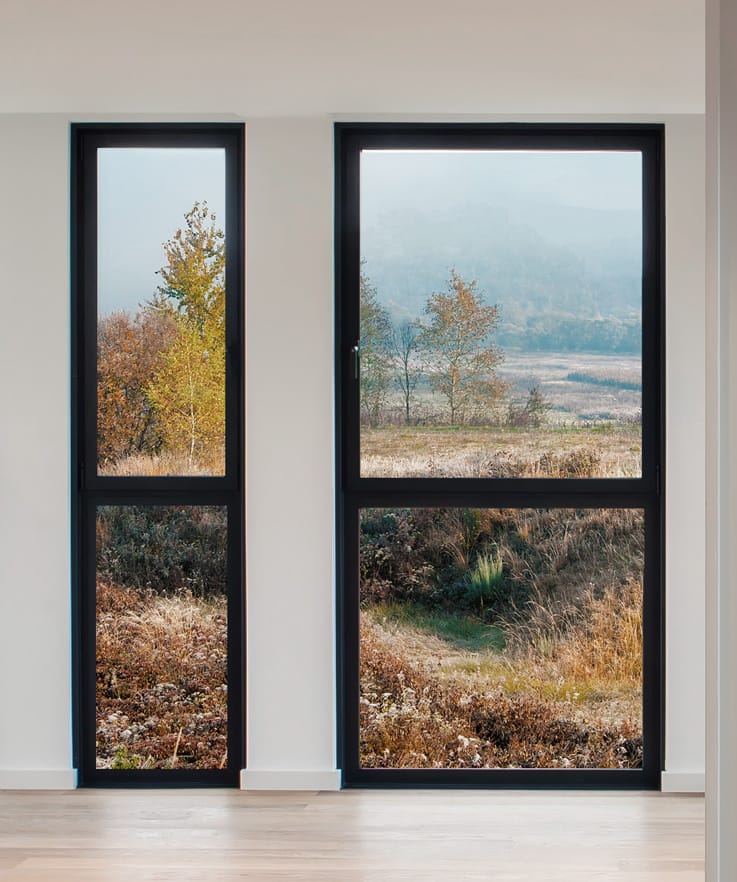
Aluminium is the strongest material we work with, which is why it is the right answer whenever an opening gets large. A frame that would need a fat plastic section to stay rigid can be made noticeably slimmer in aluminium — more daylight, less visual interruption, and a look that suits contemporary buildings.
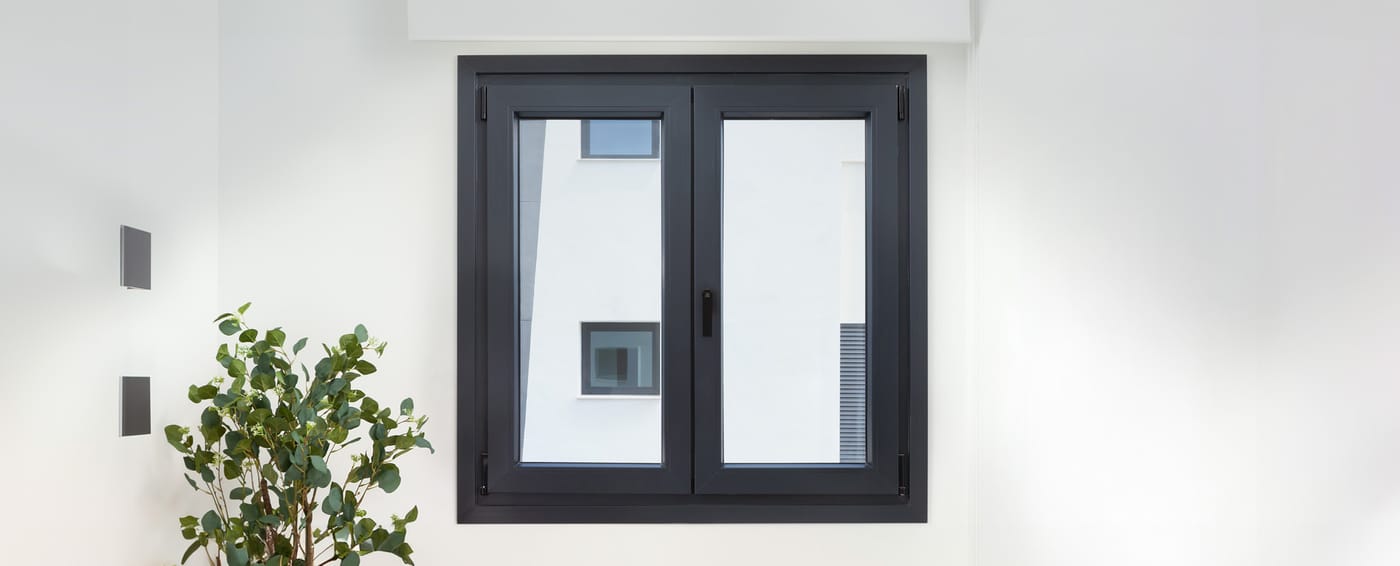
For heated spaces we use thermally broken profiles: two aluminium shells separated by an insulating polyamide bridge, so the cold outer face never touches the warm inner one. Without that bridge, aluminium conducts heat straight out of the building and collects condensation on the inside in winter.
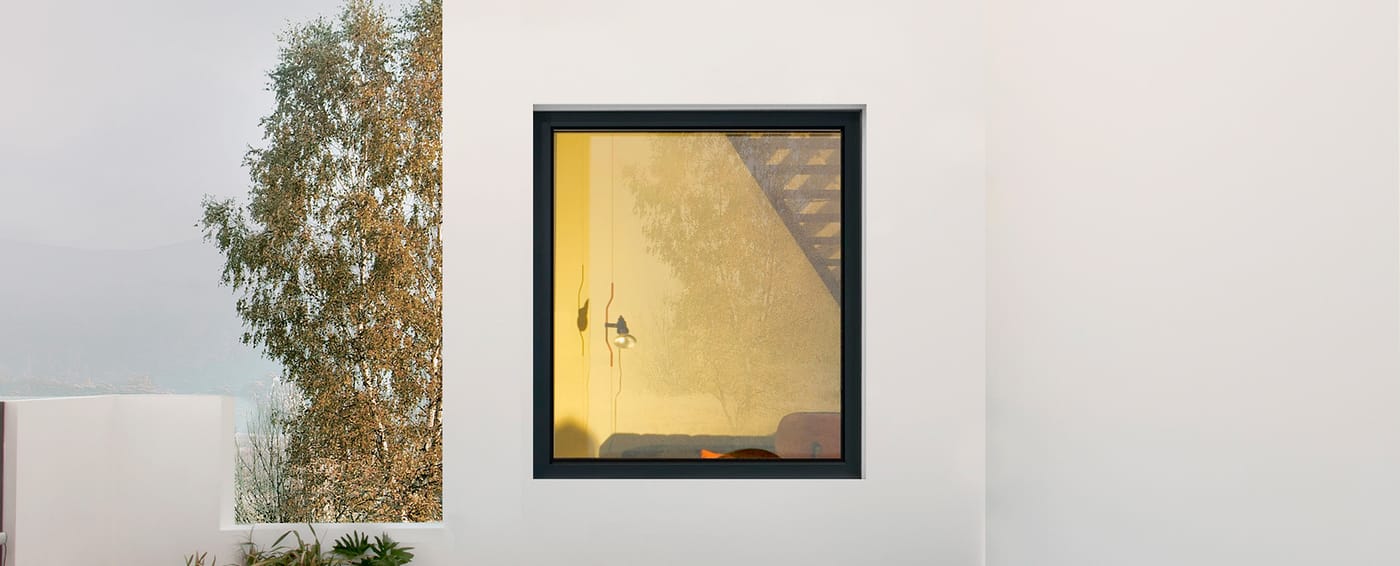
Finishes are powder-coated in any RAL colour, or anodised. Wood-effect coatings are available where the look of timber is wanted with none of the maintenance.
Polyamide barrier between inner and outer profile stops heat loss and interior condensation.
Structural strength allows tall and wide openings that plastic profiles cannot hold without heavy reinforcement.
Powder-coated inside and out — including different colours on each face.
Finish specification suited to salt-laden air, which is not optional in Batumi.
The section drawing is our own line — this is what each layer does for you.
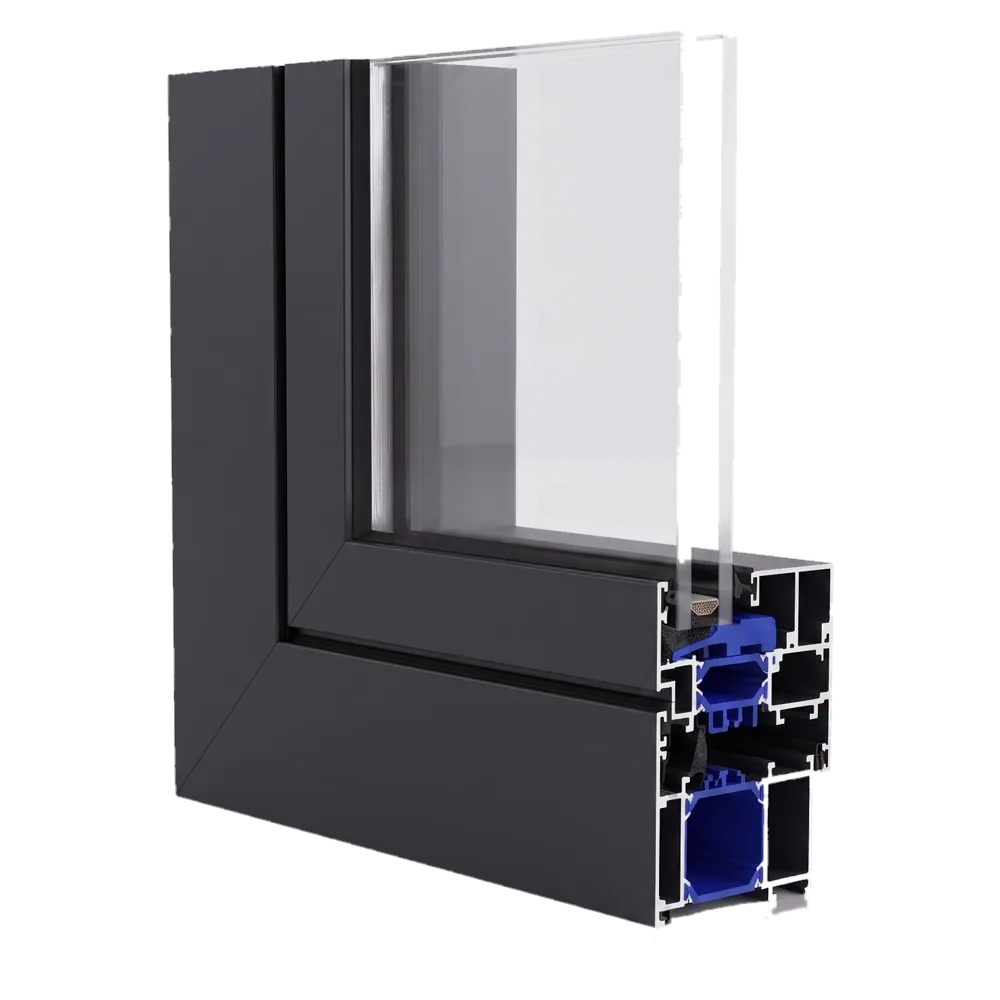











Aluminium carries heat far better than PVC. A thermal break is a polyamide barrier cast between the inner and outer halves of the profile, and it stops that transfer.
Without one, a frame in a heated room carries heat outside and condensation forms on the cold inner face — the glass usually gets blamed, but the frame is the cause.
In unheated spaces — balcony glazing, internal partitions — a thermal break adds nothing but cost.
A window chosen for a Tbilisi flat and the same window on a sea-facing balcony in Batumi are not the same product.
Salt air attacks coatings and fixings: it calls for a coastal-grade finish, gaskets that stay elastic, and stainless fixings.
The other half is wind load — it decides glass thickness, sash reinforcement and how the threshold drains.
Tilt and turn is the standard: one movement of the handle opens it, another tips it in from the top for ventilation.
For wide openings a sliding system is the right answer — the sash moves aside instead of into the room.
Powder coating in any RAL colour, inside and out — a different colour on each face if you want one.
On the coast we use a reinforced coating; wood-effect finishes are available too.
Opening size, profile system, glass build-up and site conditions decide the price.
So we measure first — free in Batumi and Tbilisi — and then quote exactly.
Measuring, drawing and quotation; once approved, production runs in our own factory.
Our own crew installs it, and the work carries a five-year warranty.
Two identical-looking windows are rarely the same price — so we measure first, free in Batumi and Tbilisi, and quote exactly.
For a normal-sized window in a heated room, metal-plastic insulates better for the money. For a large opening, aluminium is the right answer.
A thermal break is an insulating polyamide bridge between the inner and outer halves of an aluminium profile, so the cold outer face never touches the warm inner one. You need one in any heated space.
Yes. Salt-laden air attacks coatings and fixings, so on the coast the finish specification matters as much as the profile system.
There is no list price, because no two openings are the same. What decides the figure is the profile system, the glass build-up, how many sashes open and in what way, and what the site itself demands — access, fixings, and whether something has to come out before anything goes in.
Yes, we measure on site. It is free in Batumi and Tbilisi; anywhere else in Georgia there is a small charge for the visit.
Five years on aluminium and metal-plastic constructions, covering water getting through, the finish changing colour, and the frame or sash deforming.
Tell us what you are building. We measure, advise and quote — free in Batumi and Tbilisi, and for a small visit fee elsewhere in Georgia.